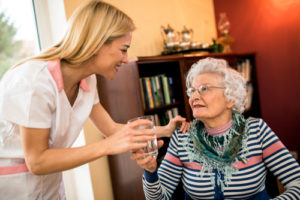
So even though you have a moral obligation and a sense of responsibility and feel deep respect and gratitude towards your parents living in Beverly Hills, you can no longer take care of them all by yourself. It is becoming unbearable as you already have too much on your plate. It might be time to seek help around the house as well as help with caring for your elderly loved one in the best way possible. High-demand home care services in Beverly Hills might be just what you and your loved one need to find inner peace and calm.
Beverly Hills has so much to offer, even in terms of senior care. When it comes to your elderly loved ones, you want nothing but the best. You will go out of your way and do everything in your power to give them just that. But although it might seem at first that there is no person in the world better at taking care of your elderly loved one than yourself or another family member, but this is not always the case. Seniors tend to have very specific demands that you cannot meet and special needs that you might not always be able to cater to. In that case, premium senior care services in Beverly Hills could be the answer!
Looking after an elderly parent or relative is no easy undertaking. When you have numerous other responsibilities on top of that, the task becomes so overwhelming that it becomes virtually unbearable. If that happens, you must by no means allow yourself to feel defeated and discouraged. Luckily, help is just around the corner: an option that you can hardly wrong with is first-rate senior home care in Beverly Hills caregivers provide. Remember that there’s no shame in seeking help if your goal is to make things better for everyone involved, especially if the end-result is utter wellbeing of your parents.
After all, put yourself in their shoes. What good is the view of the world-famousHollywood Sign when you have no one to share it with? That’s how constant loneliness feels. Even if your elderly loved one is independent for the most part, they might still need for a fellow-human to be around, for companionship if not for assistance with daily activities and other basic needs.
Dementia – the word alone sends shivers down the spine of anyone even remotely familiar with its effects. If you’ve already come face to face with this condition because you’re dealing with a parent who suffers from it, you will have already familiarized yourself within home senior care, Los Angeles families whose lives have been changed forever by dementia or another brain disease swear by skilled home help for seniors.
But what if your parent refuses to receive care and assistance? In case of dementia, especially if it was caused by a stroke, which requires special care in its own right, the patient requires constant care and vigilance. Read on to learn more.
If your elderly loved one has recently suffered a stroke, brace yourself – they are in for a challenge, and so are you. The journey to recovery will be a long and difficult one, and there is always the risk that your elderly loved one will not exactly reach the desired destination. But this risk can be avoided by taking the right steps and seeking in-home care for elderly stroke survivors is a step in the right direction. Actually, due to the rise of the frail elderly population inLos Angeles, home caregivers’ services are now needed more than ever.
Just like they help brain disease patients maintain a level of independence and stability, professional caregivers help stroke survivors get their old lives back and regain independence. Even if your senior family member is unwilling to cooperate, professional in-home care providers know how best to approach them and get them to act in their own best interest.
Looking up alternative Alzheimer’s treatments on the internet delivers a lot of interesting results. These alternative treatments include everything from music therapy to art sessions and many other fun activities that have been proven to help seniors dealing with Alzheimer’s by many studies.
But one thing that you probably never even considered to be helpful can show tremendous results in helping your seniors overcome dementia and Alzheimer’s, as recent studies have shown. We are talking about aromatherapy, and other similar alternative therapies that have been proven to deliver positive effects and surprising results.
We asked our homecare Hollywood experts to guide us through how aromatherapy can help seniors with these conditions.
Struggling with depression is not uncommon for senior citizens, and the percent of those choosing suicide as a way out is constantly growing. Despite this, therapists often neglect senior citizens, citing correlation between depression and old age. On the other hand, many elder citizens do not want to worry or burden their families, and often do not seek professional help at all. Older generations nurture strong prejudices towards seeking help to overcome a mental disorder, which only makes their suffering worse.
Depression is not a normal thing to go through in senior years, which is why seeking help for this condition is a must. Senior citizens need even more help to overcome this terrible burden. Finding good in home care in Sherman Oaks is just the first step towards ensuring that your elderly family members are well taken care of, but if your loved one does not want to seek help to battle depression, what should you do?
When Steffi Gaines was only 34 years old she was diagnosed with breast cancer and had a double mastectomy and reconstruction surgery. Her experience gave her a passion to maintain people’s dignity no matter their condition, so she made a career transition in 1999 and opened A Better Way in Home Care, serving the Los Angeles area. Referring caregivers who have the same passion is of the utmost importance to Steffi. In 2012 the Southern California Cancer Pain Initiative presented A Better Way with the Award of Excellence in recognition of their contributions to cancer pain relief.
What sets you apart from the many home care services that are available?
“With 16 years of experience, we offer professional, certified caregivers who have undergone rigorous background and reference checks. We know the people whom we refer and work to find the perfect match for each customer. Steffi personally interviews each caregiver and speaks to all potential clients.”
How do you find the perfect match of caregiver-to-client?
“Listening. We are professional listeners who work closely with the individual and their family. We advocate ‘aging in place,’ so we pinpoint the needs and personality of an individual and coordinate a living arrangement and caregiver that are conducive to happy and healthy relationships.”
“WE ARE PROFESSIONAL LISTENERS WHO WORK CLOSELY WITH THE INDIVIDUAL AND THEIR FAMILY.”
What services does A Better Way In Home Care offer?
“We specialize in Certified Nursing Assistants, Home Health Aides and companions who can be full-time, part-time, temporary, live-in or live-out. The caregivers assist with medical orders, bathing, dressing, grooming, oral hygiene, incontinence care, cooking, shopping and driving. Most importantly, our team is trained to advocate for our clients’ physical, mental and emotional wellbeing and to be the bridge between family and medical providers.”
What is the biggest challenge facing your clients today?
“Fear. The fear of making the decision to get in-home care for their loved one and the senior’s fear of having a stranger in their home. I am committed to helping families choose the best in-home care. No one should ever be uncomfortable in their home. I find out who the client was prior to becoming ill, what they did for a living, their hobbies and personality, and I match accordingly. Because I take the extra time to do this, the clients and caregivers can build a best friend/advocate relationship. This is a complete joy for me.”
PRESS RELEASE: New Long-Term Care Insurance Benefit Plans May Offer Affordable Option for Paying for In-Home Care, According to Private Care Association
Southern Pines, N.C. – February 28, 2014 – Elder care experts advise that the emergence of new strategies enabling consumers to convert their life insurance policies into long-term care insurance benefit plans could offer millions of Americans a viable strategy for being able to afford the cost of paying for in-home private care.
“Two out of every five American adults are caring for an older loved one who is aging in place, a number that continues to increase each year as the demographics shift toward an aging population,” said James Mark, president of the Private Care Association (PCA), the national association for private duty home care registries and referral agencies since 1977. “These families know first-hand the need for access to in-home private caregivers whom they can trust to help care for their loved ones. Unfortunately, Medicare and most private health insurance plans do not cover the cost of non-medical in-home care.”
In response to this growing need, the U.S. Department of Health and Human Services Administration on Aging (www.longtermcare.gov) has sought to inform Americans about a variety of options for using life insurance policies to help pay for long-term care services. These options include combination life/long-term care insurance policies, accelerated death benefits products and life settlements options for life insurance policies that might otherwise lapse.
Long term care benefit plans provide consumers who need care today — or in the very near future — to sell life insurance policies to a third party and have benefits held in an irrevocable trust that will pay benefits directly to the long term care providers they choose to provide care. This option differs from the accelerated benefit rider on many life insurance polices that will advance benefits if someone meets the HIPAA definition of chronically ill and has a life expectancy of less than 12 months.
“These new products convert a life insurance policy death benefit into an asset with living benefits that can be used to pay for in-home care services,” said Mark. “This is a promising financial option that can almost immediately offer relief for seniors and their family members who are struggling with the challenge of being able to afford the cost of private duty caregivers.”
A 2013 study published by the AARP Public Policy Institute concluded that the supply of family caregivers is unlikely to keep pace with future demand in America. The study found that the number of potential adult family caregivers for each American over the age of 80 is expected to plunge from seven potential caregivers in 2010 to just four potential family caregivers by 2030 and then down to as few as three potential family caregivers by 2050.
PCA member registries conduct background checks, verify credentials and check the professional references of caregivers before they are referred to consumers. At the same time, since the caregivers are self-employed, a caregiver registry can save families anywhere from 10 to 30 percent on their in-home care expenses. For more information about private duty home care registries and how to find in-home caregivers at an affordable price, please go to www.privatecare.org.
About PCA
Since 1977, the Private Care Association (PCA) has been the voice of private duty home care. PCA’s membership is made up of home care registries that refer self-employed caregivers to provide assistance with activities of daily living such as bathing, dressing, lifting/transferring, continence care, feeding/meal preparation, companion care, homemaker services and nursing services in the client’s home. The PCA has an involved government relations program that actively presents its position to public policymakers at the state and federal levels and, as the national voice for home care registries, the PCA promotes the interests of the private duty home care industry, advocating the consumer-directed model of care and consumer choice. For more information, please go to www.privatecare.org.
1) When a family member needs to be in a nursing home its essential to visit as random times to ensure the best care for your loved one. When the staff at the nursing home see that your family is visiting they will provide better care for your loved one.
2) Things that can go wrong in a nursing home at night include:
Staffing ratio of caregiver to patient to save money leads to compromised personal care
Staff shortages result in patients going with inadequate care
Caregivers have been known to triple diapers on a patient to avoid having to change linens
3) In interviewing CNAs they have shared confidentially that they have observed some caregivers who that pretend to wash patients hair by just adding watered to their head to give the appearance of having been bathed.
4) Food is presented at times without taking proper care to make sure the patient can easily utilize utensils and reach the food easily.
Tips and key questions to keep in mind:
Have you properly educated yourself on the care your loved one will get at the facility?
Do the meals appear to be nutritious and appetizing?
What is the turnover rate of staff?
What’s is the staff to patient ratio on each shift?
Do the residents seem to be happy and engaged?
Do the residents appear to be groggy or overmedicated?
Are the residents clean and well groomed?
Are the residents feet and toenails kept clean?
Does the environment appear to be clean?
Does it smell like urine or deodorant to cover up the smell?
There’s no more important decision than finding the right caregiver for your loved one. To learn more about getting the finest of in home care Los Angeles or Beverly Hills in home care for your loved one call A Better Way In Home Care today at: (323) 650-2211.
 So even though you have a moral obligation and a sense of responsibility and feel deep respect and gratitude towards your parents living in Beverly Hills, you can no longer take care of them all by yourself. It is becoming unbearable as you already have too much on your plate. It might be time to seek help around the house as well as help with caring for your elderly loved one in the best way possible. High-demand home care services in Beverly Hills might be just what you and your loved one need to find inner peace and calm.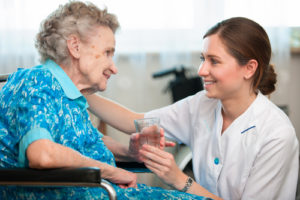
 Looking after an elderly parent or relative is no easy undertaking. When you have numerous other responsibilities on top of that, the task becomes so overwhelming that it becomes virtually unbearable. If that happens, you must by no means allow yourself to feel defeated and discouraged.

 Looking up alternative Alzheimer’s treatments on the internet delivers a lot of interesting results. These alternative treatments include everything from
  Struggling with depression is not uncommon for senior citizens, and the percent of those choosing suicide as a way out is constantly growing. Despite this, therapists often neglect senior citizens, citing correlation between depression and old age. On the other hand, many elder citizens do not want to worry or burden their families, and often do not seek professional help at all. Older generations nurture strong prejudices towards seeking help to overcome a mental disorder, which only makes their suffering worse.