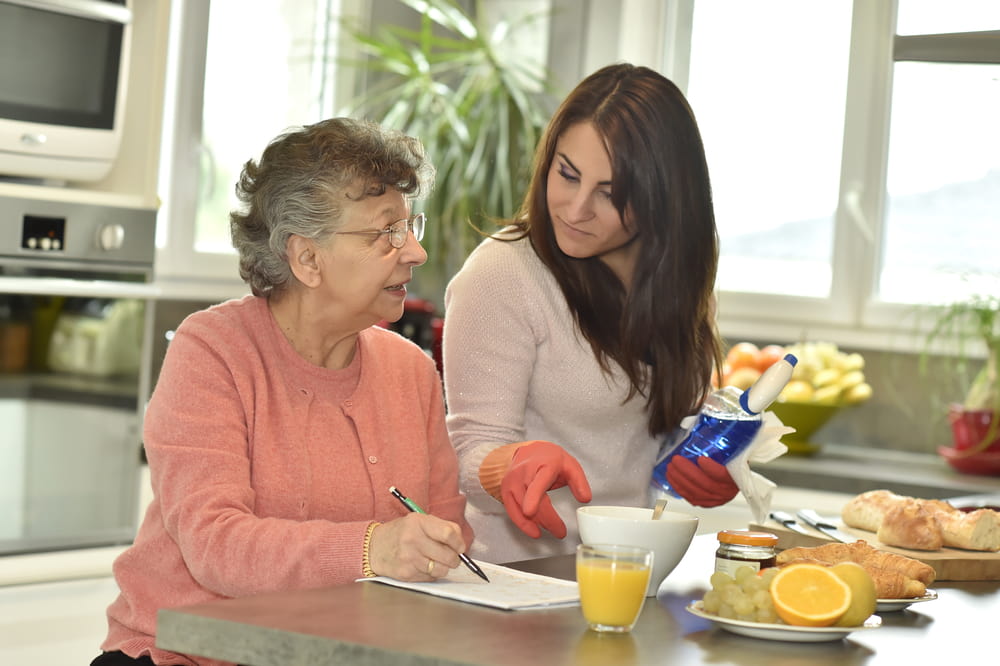
If your parent has stopped making dinner because they’re tired, that doesn’t automatically mean they need someone preparing every meal. They may still enjoy fixing breakfast or handling errands on their own. The difficult part is deciding how much help to offer when their abilities seem to change from week to week.
Families considering in-home care in Northridge can begin by talking about which parts of the day have become harder, rather than changing the whole routine at once. Bringing in assistance for those particular tasks can make adjustments easier without taking away what your parent still enjoys doing.
How can you tell when your parent’s needs are changing?
Changes often show up in familiar routines, sometimes so gradually that they’re easy to overlook. Here are four signs that your parent may benefit from a different level of support.
Everyday tasks start taking more effort
Maybe the laundry piles up because carrying a basket has become uncomfortable. Or Dad still cooks dinner, but only on days when he isn’t exhausted. Getting help with certain activities at home may become necessary even when your parent manages most things independently.
They go out less often
After giving up driving, your parent might stop suggesting visits with friends because every trip depends on someone else. Keeping them involved in transportation decisions can help you understand which outings they miss and where extra support would be useful.
They become hesitant after a setback
A fall can make familiar surroundings feel less safe. Your parent might avoid the front steps or hesitate to walk outside alone, even after recovering physically. Starting with small activities they feel ready for can help them regain a sense of security without unnecessary pressure.
Their abilities vary from day to day
Your parent may manage perfectly well one afternoon but need assistance with the same tasks the following morning. Rather than judging their needs by a particularly good day, pay attention to how often difficulties occur. Sudden changes in mobility, alertness, or health should also be discussed promptly with a healthcare professional.
What should you do when the current level of help no longer fits?
Focus on the parts of your parent’s routine that have become difficult, then consider how to provide consistent assistance without taking over everything they still manage independently.
Talk to your parent about where they need more help
Before changing the current arrangement, find out what your parent is comfortable doing and where they would welcome assistance.
Ask about difficult moments: Your parent might manage mornings well but find getting ready for bed exhausting. Rather than assuming they need help throughout the day, ask which activities have become tiring or frustrating.
Respect their preferences: Some older adults appreciate having someone nearby during certain activities but prefer to handle other tasks alone. Let their answers guide how much assistance you arrange.
Arrange support that can change with their needs
Once you know where additional help would be useful, consider how to make it available consistently.
Bring in regular assistance: If your parent needs help at predictable times, a professional caregiver can cover those visits rather than leaving relatives to arrange them each week. Temporary support may also be appropriate during recovery.
Review the arrangement as things change: Your parent may regain independence in some activities while needing more help with others. When several people are involved, making sure every visit is accounted for can prevent important responsibilities from being overlooked as the schedule changes.
Where can families find flexible in-home care in Northridge?
An aging parent’s needs rarely change according to a predictable schedule. A Better Way in Home Care helps families in Northridge and throughout Los Angeles find caregivers who can assist during temporary setbacks or as everyday responsibilities become more challenging. With over 25 years of experience and a thorough caregiver screening process, our family-run referral agency can help you explore options suited to your parent’s circumstances.
You don’t need to have every detail figured out before reaching out. Tell us what you’ve noticed recently, and we’ll discuss suitable caregiving arrangements that respect your parent’s preferences while providing the assistance they need now.
A daughter brings groceries on Mondays. A neighbor checks in midweek, and her brother handles rides to appointments. For families coordinating elderly care in Northridge, this might sound like a workable plan. But when an appointment changes, each person may assume someone else can handle the ride. Dad ends up waiting by the door, unsure whom to call. The frustrating part is that everyone wants to help. They just don’t always know what the others have agreed to do.
Where do gaps in an aging parent’s care usually happen?
Often in the time between one person’s visit and the next. A relative can do everything they promised, and something important can still be missed. The problems tend to look ordinary at first:
Unclear responsibilities: One relative checks in before lunch and assumes a sibling will bring food later. The sibling thinks the meal was already handled. Neither realizes there’s a gap until evening.
Changes in routine: When a parent stops driving, relatives may cover appointments but overlook the weekly trip to see a friend. Asking which outings still matter to them can reveal the rides nobody has agreed to handle.
Unexpected changes after a fall: Family members take turns visiting for a week, then return to their normal schedules. Their parent is still nervous about going outside alone. Taking small steps back into familiar activities may call for help longer than everyone expected.
Missed warning signs: A missed meal, an appointment that keeps getting postponed, or repeated questions about who is coming tomorrow can be clues. Each helper may see only one of those moments, so nobody notices the pattern.
Parents sometimes notice these gaps before anyone else, but hesitate to mention them because they know everyone is busy. That’s one reason the arrangement shouldn’t depend on them speaking up whenever something gets missed.
How can families coordinate care without missing important details?
Start with the help a parent needs at set times, rather than who might be free. An occasional shopping trip is easier to rearrange than someone needing assistance getting ready each morning. Once those regular needs are clear, agreeing on who handles which tasks makes it easier to see when a professional caregiver should step in.
Look at the times that are hardest to cover
Think about where the family already struggles to be available. A parent may manage afternoons without much trouble but now need someone there in the morning, when getting dressed and preparing breakfast take more effort.
A vague promise to “check in more often” won’t necessarily cover that hour.
Let a caregiver take on recurring visits
When the same opening appears week after week, a regular caregiver can cover it without requiring a new round of family messages. That could mean helping with breakfast on weekdays or giving Dad a ride when relatives are at work.
Family members can still take him out on weekends or stop by for company. They don’t have to choose between doing everything themselves and stepping away entirely.
Talk about changes before they become a bigger problem
Ask your parent whether anything feels harder than it did a month ago. Maybe getting ready for bed takes longer, or they would rather have company at dinner than a midday check-in.
Adjusting the level of assistance as new needs arise gives you room to respond without taking over the parts of life they still enjoy managing themselves. Keep the caregiver informed about what matters to your parent, too, so each visit feels familiar.
Where can families find dependable elderly care in Northridge?
A Better Way in Home Care has been helping families in Northridge find dependable caregivers since 1998. As a family-run referral agency, we take time to understand your parent’s routines and preferences before recommending someone whose background and references we’ve carefully checked. Whether you need help with weekday mornings or transportation when relatives are unavailable, we can connect you with a suitable professional.
We offer flexible referrals for part-time and full-time assistance, including temporary arrangements when needed. If certain visits keep falling through, tell us which hours are difficult to cover and what your parent prefers to manage independently. Our team can help you find a caregiver who fits those needs and your family’s schedule.
A fall can leave an older adult feeling uncertain long after the physical soreness has faded. They may hesitate before using the stairs, avoid walking outside alone, or turn down outings they once enjoyed. That loss of confidence can gradually make daily life feel smaller. Families using home care in Northridge can help by creating opportunities for their loved one to feel steady, capable, and comfortable again without rushing the process or taking over everything they still do well.
Why can a fall affect a senior’s confidence so much?
After a fall, an older adult may start looking at familiar surroundings differently. A hallway that once felt ordinary might suddenly seem risky. A short walk to the mailbox can feel intimidating when they are worried about losing their balance again.
The fear of falling can lead older adults to cut back on activities, which can reduce physical fitness and make everyday movement harder. Family members can help by taking that fear seriously while still encouraging the senior to stay engaged in daily life.
How can you help a senior feel secure again?
Confidence usually returns through small, successful experiences. The key is to make support feel useful without making the senior feel incapable.
1. Start with activities that feel manageable
Ask which movements or situations make your loved one nervous now. They may feel comfortable walking around the kitchen but worry about stairs, uneven sidewalks, or getting out of the shower.
Start with what feels achievable. A short walk outside, preparing lunch together, or accompanying them on a simple errand can help them rebuild confidence at their own pace. Try not to fill every activity with warnings. Constant reminders to “be careful” can make a person feel as though another fall is expected.
2. Make practical changes around the home
A fall is a good reason to take another look at the spaces your loved one uses every day. Loose rugs, poor lighting, cluttered walkways, and frequently used items stored out of reach can make movement more difficult.
Small adjustments can make the home easier to navigate while preserving familiar routines. This becomes especially important when support needs start changing. A person who previously managed everything alone may now benefit from help with a few specific tasks without needing assistance throughout the entire day.
3. Bring familiar routines back gradually
Regaining confidence is easier when normal life starts to feel normal again. Encourage your loved one to return to activities they enjoyed before the fall, even if they need someone with them at first.
That might mean sitting outside with morning coffee, visiting a friend, taking a short walk, or going to a favorite restaurant. Someone who is also adjusting to life without driving may already feel less independent, so avoiding outings after a fall can deepen that feeling. Reliable transportation and a familiar companion can make getting out feel more manageable.
4. Let the senior decide where extra help feels useful
Family members often become more protective after a fall. It is natural to want to prevent another accident, but constant supervision can leave an older adult feeling as though they are no longer trusted.
Ask what would make them feel safer. They might want assistance during showers, company on walks, help carrying groceries, or someone nearby during certain parts of the day. Their answers give families a clearer idea of where support is actually needed.
5. Keep everyone on the same page
When siblings, relatives, and professional caregivers all contribute, communication matters. Coordinating help among family members can prevent repeated check-ins, conflicting advice, and confusion about appointments or daily responsibilities.
A shared calendar or short family update can be enough to keep everyone informed without making the senior feel constantly monitored.
How can I find dependable home care in Northridge and the surrounding area?
A Better Way in Home Care can provide practical support while an older adult becomes comfortable with everyday activities again. A caregiver can assist with walks, errands, personal care, meal preparation, transportation, companionship, and other routines that may feel more challenging after a fall.
For families near California State University, Northridge and throughout the surrounding community, our team can help build support around what your loved one actually needs while respecting the things they still want to handle independently. Contact us to discuss what has changed since the fall and how the right level of assistance can help everyday life feel comfortable again.
Giving up driving can change far more than how an older adult gets from one place to another. A car often represents independence, privacy, and the freedom to make plans without relying on someone else. When driving is no longer safe or practical, that loss can be difficult to accept. Families working with caregivers in Northridge can make the transition easier by focusing on what the senior still wants to do and finding dependable ways to keep those routines within reach.
Why is giving up driving so difficult for older adults?
For someone who has driven for decades, handing over the keys can feel like losing part of everyday independence. A trip to the grocery store, a doctor’s appointment, or lunch with a friend suddenly requires planning around another person’s availability.
That shift can bring frustration, embarrassment, or worry about becoming a burden. Some seniors also begin staying home more because asking for a ride feels inconvenient.
How can you help a senior adjust after they stop driving?
The transition usually goes more smoothly when family members recognize the emotional loss instead of treating transportation as the only problem to solve.
1. Keep the senior involved in transportation decisions
A new transportation routine should still give the older adult choices. Ask which outings matter most, which days they prefer to run errands, and who they feel comfortable riding with. The National Highway Traffic Safety Administration recommends involving older adults in these conversations and planning ahead for how they will stay connected when they reduce or stop driving.
Try to preserve familiar habits where possible. If Tuesday morning has always been grocery day, keeping that routine can make the change feel less disruptive. Regular appointments, religious services, visits with friends, and favorite local stops can all remain part of the schedule.
2. Replace lost spontaneity where you can
Scheduled transportation covers necessary trips, but seniors can also miss the ability to simply decide they want to go somewhere.
Family members and caretakers can leave room for unplanned outings, whether that means grabbing coffee, stopping by a favorite store, or taking a short drive just to get out of the house. That flexibility can help the senior feel less confined by the change.
Some seniors adjust quickly. Others gradually stop suggesting outings, turn down invitations, or rely almost entirely on one family member. Pay attention to comments such as:
“I don’t want to bother anyone.”
“It’s easier if I just stay home.”
“You already have enough to do.”
“I don’t really need to go.”
These statements can signal that the senior is limiting their life because transportation now feels complicated. The emotional response can look similar to what families see when learning how to help a senior rebuild confidence after a fall. In both situations, the goal is to provide enough support to make activities feel manageable while still allowing the person to make choices for themselves.
4. Create a dependable routine without taking over
Consistency helps. When a senior knows who will take them to an appointment or when errands usually happen, they do not have to renegotiate every trip.
If several relatives or helpers are involved, a shared calendar can also reduce confusion. The senior should remain part of those decisions. Ask before changing established plans, leave room for preferences, and avoid treating transportation like another task on the family schedule.
How can I find experienced caregivers in Northridge and the surrounding area?
A Better Way in Home Care helps older adults continue participating in the routines and outings that make everyday life feel familiar. Whether your loved one needs help getting to appointments, running errands, visiting friends, or simply getting out of the house more regularly, dependable support can make giving up driving feel less limiting.
For families near Northridge Recreation Center and throughout the surrounding area, our team can help create a care arrangement that respects your loved one’s preferences while making transportation easier to manage. Contact us to discuss the kind of support that would help them stay connected to the people, places, and routines that matter.
When day-to-day tasks become daunting ordeals for your elderly loved one, it is paramount that you ensure their safety. Consider the risk of having them live alone and find ways to keep them safe, especially when they have health problems. One of the best ways to ensure they are totally safe yet free to continue their way of life is to hire in-home care services in Hollywood.
But how do you know it is the appropriate time to seek professional help for your senior? Here are some signs:
Loneliness
With a busy work schedule, you might find it difficult to make time to spend with your elderly loved ones and cater to their every need. Let’s not forget that you too have a family of your own that needs your attention. Even though it is unintentional, seniors may feel neglected at some point.
If you notice that they are seeking your attention, chances are they are feeling lonely. And, apart from squeezing in some little time, it may be a good idea to hire a caregiver for them. The caregiver will offer round-the-clock companionship which is critical to the elderly. They can also be good outdoor walk partners and friendly board game opponents. Professionals will always treat your elderly loved one as a member of their family, and they’ll never feel lonely.
Lack of mobility
If you notice that your aging family member has it rough moving from one place to another and requires constant assistance, then it might be a good time to seek the services of in-home care. A caregiver will be able to help them move around and accomplish their daily activities such as doctor appointments, strolls at the park, going to the grocery store, and even having a bath. The elderly in this situation may even need round-the-clock services and companionship.
Poor memory
Memory loss and other dementia symptoms can be hazardous when a senior is living alone. If you notice these signs, it is important that you hire in-home senior care services as soon as possible. They will remind your loved one to take their prescribed drugs and other important things on their schedule. With a professional taking care of your elderly relative, you will have the peace of mind to do other things and not worry about their safety.
Medication is not taken correctly
Whether it is unintentional forgetfulness or just being stubborn, missing prescribed medication is a health hazard to your elderly loved one. You can help them by creating a medication schedule for them to follow. Or, hire an in-home caregiver who will not only ensure medications are taken on time, but will also give general personalized care to your loved one.
Inability to prepare food properly
Sometimes there comes a point in an older adult’s life when they lose the desire and ability to cook healthy meals for themselves. This may lead them to eat unhealthy foods which are dangerous at their age. If you notice such behavior, then it is best to seek in-home senior care services in Hollywood. The caregivers will ensure that your senior has a proper diet.
Declined personal grooming
It is not unusual for the elderly individual to overlook basic grooming habits like wearing clean clothes and bathing. It is best to hire a professional to assist your senior by setting up a convenient personal grooming schedule and laundry assistance.
Huge arrears in utility bills
If you notice that your elderly loved one is constantly failing to pay bills on time, then it is best that they should not live alone. Unpaid bills may lead to disconnection of amenities such as gas, water, and electricity. Do not let a loved one live in such misery, help them pay their bills and hire them a professional to assist them in their daily activities.
Desired independence
Independence and freedom are crucial for any human being. We are created to be mobile. Therefore, being restricted to a certain area can be detrimental to us both mentally and psychologically. This is why we should always respect our seniors’ decision to age and die in their homes and not a nursing center.
If you notice that your aged loved one cherishes their independence but would need help from time to time, then it is appropriate that you hire an in-home caregiver in Hollywood City for them.
Juggling work, family, and the needs of an aging parent or relative can be overwhelming. The weight of these responsibilities can leave you feeling spread thin, constantly torn between the things that require your attention. You long to provide the best possible care for your aging loved one, but the demands of daily life can make it seem almost impossible. Luckily, there are various options for senior care all over Los Angeles that can help you make this significantly easier.
From preparing nutritious meals to providing medication reminders, an experienced professional can cater to a whole range of needs. In the meantime, you will be able to take a much-needed break and spend time with your aging loved one doing something you both genuinely enjoy doing instead of constant caretaking.
As our loved ones age, it’s only natural that we worry about their well-being. One of the many issues that can come with age is increased stress and anxiety. While some stress is normal, too much stress can lead to serious health problems.
That’s why it’s important to be on the lookout for signs of stress in your senior loved one and to know how to help them combat it. Whether you do this with the help of professional caregivers in Marina Del Rey or on your own, it’s important to be informed on the topic.
One of the main sources of stress for seniors is feelings of loneliness and isolation. According to UCSF’s study, more than 40% of seniors regularly experience loneliness. This can lead to business all sorts of other health problems, including depression, anxiety, high blood pressure, and sleep problems.
That’s why it’s important to make sure that your elderly loved one stays connected to their loved ones, whether that means setting up regular Skype calls or planning family visits.
2. Get them involved in their community
Another way to help reduce your elderly loved one’s stress is by getting them involved in their community. There are plenty of ways to do this, depending on their interests. If they’re interested in art, for example, you could look into joining a local art group or taking classes at a nearby museum or community center.
On the other hand, if they’re looking for something more active, there might be a senior citizen sports league in your area. Getting involved in activities outside the home can help reduce feelings of isolation and loneliness while also providing a sense of purpose.
3. Help them stay organized
As we age, it can become more difficult to keep track of things like doctor’s appointments, medications, and bills. This can lead to a lot of unnecessary stress, especially if the senior is experiencing symptoms of cognitive decline. Luckily, there are a few ways you can help your elderly loved one stay organized and on top of things.
One way is by creating a simple spreadsheet with all their important information like doctor’s appointment dates and contact information so they always have it on hand when they need it. You could also look into online bill-paying services or medication reminder apps that can help make things easier for them (and for you).
4. Promote healthy coping mechanisms
Sometimes the best way to deal with stress is by using healthy coping mechanisms like exercise or relaxation techniques. As we age, it’s important to stay active both mentally and physically through activities like brain games, reading, gardening, or walking outdoors.
Taking some time each day for some simple relaxation techniques like deep breathing or meditation can also work wonders in reducing stress levels. No matter how resilient your elderly loved one may be to stress, these techniques are helpful for stress reduction at any age.
5. Encourage them to eat right
What we eat plays a big role in our overall health, including our mental health, so it’s important to make sure that your elderly loved one is eating right. This means eating plenty of fruits and vegetables while limiting processed foods as much as possible.
It might also mean cutting back on caffeine or alcohol if either is causing problems with anxiety or sleep deprivation. Having balanced meals throughout the day will help keep energy levels up and stress down.
Where can I find experienced caregivers in Marina Del Rey and the surrounding area near me?
Our agency connects you with experienced in-home specialists in senior care who can help with all aspects of caring for your elderly loved one. We carefully screen and select professionals who are compassionate and skilled in providing high-quality care.
The professionals we match you with are trained to provide assistance with activities of daily living, personal care, light housekeeping, and much more. In addition, they can provide transportation to medical appointments and other errands as needed, as well as walks around Marina Beach with your elderly loved one.
If you’re interested in learning more about our in-home care services, contact us today! We would be happy to answer any of your questions and match you with a professional who can meet your or your loved one’s specific needs.
The elderly population experiences a great deal of stress. The challenges of old age such as retirement, health issues and isolation can make your senior loved one more stressed and in a chronically bad mood. Given the aging population in the United States, more and more families are finding themselves in need of home care agencies for their elderly loved ones in Marina Del Rey.
These professionals provide a valuable service by helping to relieve the stress of caregiving and providing a reliable source of support. Read on to learn more about why the elderly population tends to stress more than their younger loved ones.
Why do old people stress so much?
There are a number of reasons why older adults may experience more stress than younger adults. Let’s have a look at the 5 most common reasons:
More responsibilities
The increased responsibilities that come with age can be a major source of stress. For example, older adults may have to care for young children or grandchildren, manage a household, and deal with health issues.
In addition, older adults often have more financial obligations than younger adults, including mortgages, credit card debt, and medical expenses. All of these factors can lead to increased levels of stress.
Facing retirement
Retirement can be a stressful time for many older adults. For some, it may mark the end of a long and successful career. Others may find retirement to be a sudden and unexpected loss of income.
In addition, retirement can also bring about changes in lifestyle and social status. For example, retired individuals may no longer have the opportunity to interact with co-workers on a daily basis. As a result, they may find themselves feeling isolated and alone.
Struggling with a loved one’s death
As people age, they often face more significant losses, such as the death of a spouse, close friends, or other loved ones. The grief that follows these losses can be very difficult to cope with, even for more resilient seniors, and may lead to feelings of stress and isolation. This can be a difficult time for anyone, but it can be especially hard for older adults who may have already lost many friends and loved ones.
Chronic health issues
Declining health can also be a major source of stress for the elderly. Chronic health issues can be painful and physically debilitating, making it difficult to perform everyday tasks. Potential cognitive decline and chronic tiredness can make the situation even more difficult.
These conditions often require ongoing medical treatment, which can be expensive and time-consuming. Finally, chronic health issues can cause feelings of anxiety and helplessness, as older adults worry about their declining health and ability to care for themselves.
Loneliness and isolation
A combination of all of these reasons often results in an intense feeling of loneliness for many seniors. Their retirement from work can make their social circle shrink. This can leave them feeling isolated and cut off from the world.
Their health problems make it difficult for them to get out and about, which can also contribute to feelings of loneliness and isolation. Another possible source of stress is that some of the elderly may be on a fixed income, or they may have expensive medical bills. If there’s no one to help them with this, it can make their feelings of loneliness even worse.
Final note
While stress is a natural part of life, it’s important to find ways to manage it in order to maintain our physical and mental health. Fortunately, there are many resources available to help seniors cope with stress.
How can I find reliable home care agencies in Marina Del Rey and the surrounding area?
Caring for an elderly loved one can be a difficult and stressful task. If you are feeling overwhelmed, A Better Way In Home Care can refer a caregiver to provide the assistance you need. They can help with bathing, dressing, meal preparation and various other tasks.
Transportation to doctor’s appointments and other errands can be provided. Most of all, the caregivers can provide your elderly loved one with companionship and conversation, which can help to reduce stress levels. A walk around Burton Chace Park with one of the experienced caregivers we match your elderly loved one with, can do wonders for their mood and well-being. Let us refer quality care that will allow your loved one to age in place in the comfort of their own home. Give us a call today to learn more about how we can help.
Even if a senior person you care about is not entirely dependent on you, they still need occasional help around the house, a ride to the grocery store or the doctor’s office, or supervision of their diet and medication regimens. But time is a scarce resource and sometimes you just need a long, well-deserved break. It can be difficult to find time for one when you have an elderly loved one to look after.
Adult day care, which incorporates social activities and caring for a person’s health and wellbeing could be the solution you need. Much like independently provided home care in Cheviot Hills or other neighborhoods in the area, adult day care is a valuable resource for overworked family caregivers who are struggling to keep up with the demands of senior care, which can turn into a full-time job in its own right.
So what services do adult day care centers offer and how does adult day care work?
What are day care centers for the elderly?
Adult day care services are normally only available during daytime hours on weekdays. This is ideal for family caregivers who would otherwise have difficulty attending their own doctor’s appointments or running errands, especially if they also have full-time jobs and young children to take care of.
When it comes to adult day care or any other form of specialized senior care, each person has unique needs. Different people require different levels of service. Many adult day care centers offer social and recreational opportunities and focus on non-medical custodial care, but some day care centers for the elderly offer a more comprehensive scope of services:
Social activities
Nutrition
Personal care
Health services
Transportation
Adult day health care centers offer health services in addition to a range of senior activities and social programs. There are also specialized dementia care facilities that provide closer supervision of care recipients.
Who attends adult day care centres?
Adult day care centers are suitable for seniors over the age of 65 who need some form of a long-term care service. Individuals who attend adult day care centers are not necessarily ill and frail. They can be perfectly fit seniors looking for companionship and an opportunity to socialize and spend quality time with peers.
In the short term, adult day care is a flexible, economical solution for overworked caregivers who need respite. However, in the long term, care recipients may require a more personalized approach within a familiar setting where they can enjoy peace, quiet and privacy.
Does Medicare cover senior day care?
Medicare alone does not cover the costs of adult day care, but some Medicare Advantage Plans may provide partial coverage.
Looking for comprehensive home care in Cheviot Hills and the LA area?
Some of us grow old without ever having to give up on our independence and freedom. Others end up in need of assistance. This is nothing to be ashamed of. The older we get, the less independent we are and the more assistance we need. This is the circle of life.
This is why it is so important to have a reliable someone to fall back on, and it does not have to be a family member. Professional caregivers provide their services in the comfort of senior homes in Cheviot Hills and other Los Angeles neighborhoods.
Finding a person you can trust to take good care of your aging loved one is no easy feat. That is where we come in. Let us help you improve your elderly loved one’s quality of life without asking them to give up on their independence or the home they have worked so hard all their lives to build. Contact A Better Way in Home Care now!
Sarah is swamped with work and concerned about the outcome of her upcoming child custody hearing because she and her estranged husband failed to work things out. No wonder she didn’t notice that her mom was becoming increasingly forgetful, and for reasons other than old age. Little does she know that her mother’s condition could deteriorate rapidly without proper care and treatment.
Many seniors experience memory issues and this is a normal part of getting old. But for some seniors, these issues are signs of a more serious predicament: Alzheimer’s disease or other forms of dementia. Being diagnosed with dementia is devastating news for the person with the condition and their loved ones.
So what is a memory care and what are its benefits for individuals struggling with dementia-related memory loss? What are the more affordable alternatives to memory care?
What is included in memory care?
Memory care is a specialized form of adult care. It is sometimes also referred to as Alzheimer’s care, because Alzheimer’s disease is the most widely known form of dementia. Within memory care, individuals struggling with a form of dementia receive 24-hour care whereas specialized memory care facilities also provide housing combined with 24-hour care.
These facilities focus on making the residents’ living environment safe and comfortable. The environment is uniquely designed to create a sense of familiarity and intimacy, reduce confusion and prevent wandering. These are typical behaviors of individuals battling dementia which may have devastating consequences.
Memory care can have a considerable positive impact on patients with dementia and greatly improve their quality of life. Patients get to spend time in a secure, familiar environment and specialized staff takes care of their needs.
However, memory care is expensive. Although Medicare covers some aspects of dementia, the vast majority of patients cannot afford it. This is why their families often look for alternatives such as adult day care services, family caregivers or home caregivers with experience in assisting clients with dementia.
What is the difference between assisted living and memory care?
Individuals with memory loss caused by Alzheimer’s or other forms of dementia can be physically fit and mobile, especially in the early stages of the disease. But as the condition progresses, they require a higher level of care, assistance, and supervision.
The staff at a memory care facility has undergone specialized training. They have experience in helping patients with dementia. Residents may also have access to and benefit from memory-enhancing therapies. On the other hand, memory care facilities may be too restrictive for someone with early onset of dementia.
Assisted living facilities, on the other hand, are primarily intended for individuals who are unable to cope with daily activities and need assistance with meal preparation, personal hygiene, medication regimens, etc., usually because of considerable mobility issues or other medical conditions. This housing facility is suitable for people with disabilities but it is also available to other individuals who cannot or choose not to live independently and on their own.
How do you know if your loved one needs memory care?
A person does not need to be officially diagnosed with a dementia-related condition for its friends and family to know that something is wrong. Often, a person with dementia will undergo a radical, visible decline in overall health.
Signs and symptoms of dementia can become more dangerous over time and lead to life-threatening outcomes, so it’s important to seek help as soon as possible. In addition to serious signs of memory loss, the person may show the following physical signs:
Issues with the medication regimen (skipping doses or overdosing)
No food in the house
Various forms of self-neglect (lack of personal hygiene, poor feeding, not wearing appropriate clothing, not tending to medical conditions)
Drastic weight loss
Hunched posture
Strange bruising, fractures or other injuries
Unpaid bills
Missing important appointments
Alienation from social circle
Individuals with dementia need person-centered dementia care within a full continuum of care coordinated across other physical and mental health care services. But especially beneficial for dementia patients is that they feel safe, comfortable, and familiar with their living environment.
If you notice signs of memory loss in a family member, it may be time to consult a specialist and see if your aging loved one may be battling a chronic illness. That way, they can start treatment in a timely manner.
Your safest choice for homecare in Cheviot Hills and other LA neighborhoods
Catering to the specific needs of your aging loved one can be challenging and demanding, especially if they are experiencing dementia-induced memory loss. But that does not mean they need to resign themselves to a life of solitude and infinite restrictions.
No environment feels as secure as home. This is where we come in. We can match you with experienced caregivers who are capable of dealing with any scenario. We can help you find a compassionate and caring senior care professional with a kind and patient bedside manner, one who will show up at your loved one’s home in Cheviot Hills or elsewhere in LA ready to provide them with the care they need. Contact us today to find out more.


 Changes often show up in familiar routines, sometimes so gradually that they’re easy to overlook. Here are four signs that your parent may benefit from a different level of support.
 Focus on the parts of your parent’s routine that have become difficult, then consider how to provide consistent assistance without taking over everything they still manage independently.

 Unclear responsibilities: One relative checks in before lunch and assumes a sibling will bring food later. The sibling thinks the meal was already handled. Neither realizes there’s a gap until evening.